
Changing the Way Change is Done
In Syngineering, we use the laws of nature to show you how sense into hidden or invisible present in all organizations. We use the Gestalt cycle of experience as the core process to collaboratively build agility into your organization. In the Sense step of the cycle, we look for misalignments between strategy, internal culture, and external business environment and your organization's performance. In Mobilize, if there is misalignment, we initiate a collaborative change effort to identify root issues and explore options. In Frame, we identify the desired "best fit" operating model. In Customize, we attend to the details and unintended consequences, recognize successes, and return to Sense.
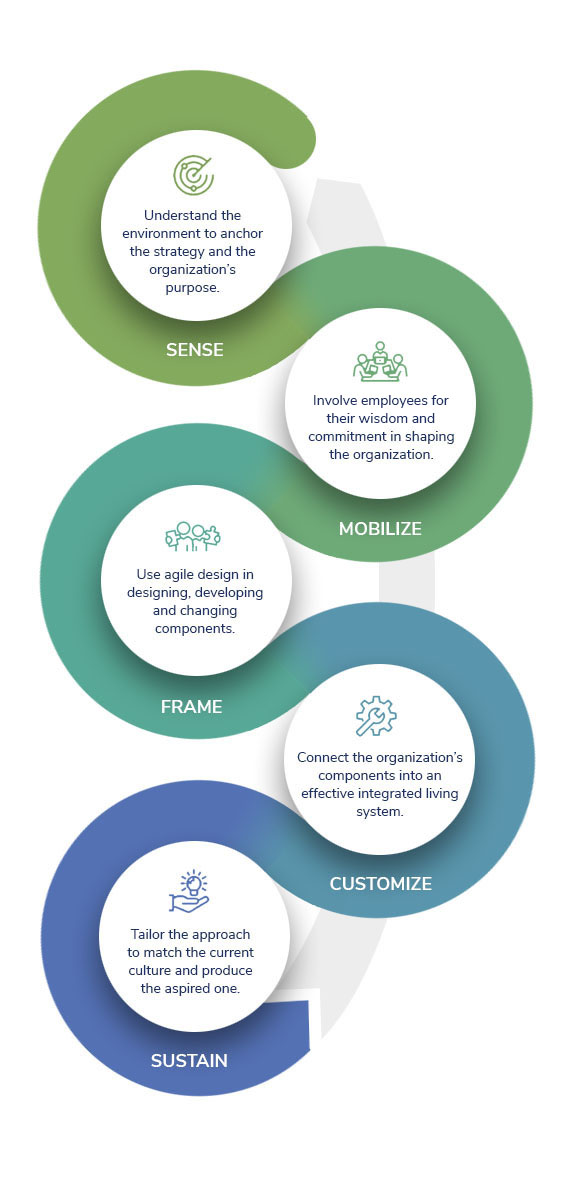

Identify and engage the people impacted by the change. Bring the wisdom already inherent in your organization, and if larger and more traditional, do what it takes to have your sponsors and champions be owners of the change effort. This entails sensing and engagement, bring together a diverse set of stakeholders to create a shared view of the current reality. Scan for changes in the external business environment and in the internal organizational culture. Authentically assess the the reality of organization’s performance, strategy, and culture. Of the 4 predominant organizational cultures - decide what organizational culture is needed your business environment based on the 4 types, align them and align them to best achieve your strategy. Use both objective and subjective data to support, balance and challenge your views. Surface tensions and opportunities between where you are and where you want to be. Decide are these compelling enough to commit resources to act now? Remember that when in complexity, solving problems doesn't resolve, and balancing the tensions does find the best way forward.

If so, identify resources to take a deeper dive into both the current state and into your desired future state. Reverse engineer the strategy. Diagnose what else needs to change along with the criteria to be used for making key design decisions. Conduct design thinking workshops to better understand what’s needed and what’s possible. Identify personas and understand their pain points. Look at how people and technology can create a better future for them. What is your organization’s role in all of this? Are you looking wide enough for the solutions? Who else could you involve in this process?

Canned approaches don't work; involve a cross section of stakeholders in framing how your organization will work and is structured. Fashion an operating model around the core work. Consider what design options do you have that fit your desired outcomes? Assess each option against your agreed set of design criteria to determine the way forward. This is an iterative approach to design so consider what is the minimum that you need to test your hypothesis and to start to deliver value? How will you collect feedback early and often? What is still missing? Who else needs to be involved? Remember that Structure is the last thing to do in organizational design, after determine strategy, operating process, customers and suppliers. Do not reorganize the HR reporting structure or org chart - that is like moving the deck chairs on a sinking ship.

Have operating staff and enduser involved in developing the details of your operating model and have the deploy it in their work group, including defining the work accountabilites that are needed for both operational structural change. Look at key processes, relationships and technology to enable new ways of working. Consider systemic levers and impacts as they relate to your components (link to the components page here) and desired culture. Identify and deploy your changes in the organization within the shortest time frame possible to deliver value. Gather input and further refine your solutions as you go. Continuously sense, respond and adapt. Help others to do the same. Make trade-offs based on priorities, capabilities, and capacity.

Embed the changes through high engagement, learning and coaching. Show people what it means to operate in the aspired new culture and how to make that shift in a meaningful way. Help them to understand the importance of their role and how it relates to others inside and outside of the organization. Celebrate successes. Acknowledge people’s contributions. Provide opportunities for further growth and collaboration. Build in continuous feedback and learning loops. Focus on value delivery. Sustain completes the cycle, ensures tensions are addressed, and returns the organization back to continuous sensing. Design thinking, which seeks meaningful and sustainable solutions, is a key feature throughout the cycle but especially in this stage. Where there is continuous sensing, solutions need not be perfect, just good enough to address the immediate issues.